Huna Book — Beauty & Wellness Booking Platform UI/UX Design (Figma)
Complete UI/UX design for a beauty and wellness booking platform targeting the Moroccan market. Designed by web designer and UI/UX Designer Hamza Miloud Amar in Figma.
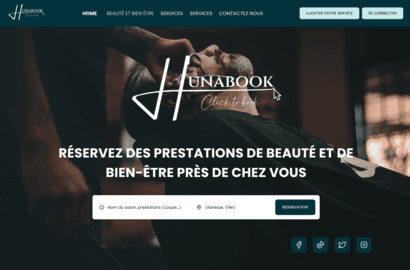
Overview
Huna Book is a complete UI/UX design project I delivered as a web designer and UI/UX designer for a Moroccan startup building an online booking platform for beauty, wellness, and leisure professionals. The platform connects clients with hairdressers, aestheticians, tattoo artists, spa therapists, and other service providers across Morocco.
The Problem
The beauty and wellness industry in Morocco operates largely offline:
- Clients call or WhatsApp to book, often facing long wait times and no-shows
- Professionals manage appointments manually with paper calendars or basic notes
- Discovery is word-of-mouth — no way to browse services, compare prices, or read reviews
- No-shows cost professionals significant revenue with no cancellation system
- Payment is cash-only, creating friction and security concerns
My Role
As the lead UI/UX designer, I was responsible for:
- User research and competitive analysis
- Information architecture and user flow mapping
- Wireframing and high-fidelity prototyping
- Design system creation with 50+ components
- Mobile-first responsive design
- Design handoff with developer documentation
Design Process
Phase 1: Discovery & Research
- Competitive analysis of Treatwell, Fresha, and local Moroccan competitors
- User interviews with 8 beauty professionals and 12 clients
- Journey mapping for both client and professional personas
Phase 2: Information Architecture
- Sitemap defining 6 core sections: Discovery, Booking, Profile, Dashboard, Payments, Notifications
- User flows for critical paths: search → book → pay → review
- Content strategy for service categories and professional profiles
Phase 3: Wireframing
- Low-fidelity sketches for rapid iteration
- Mid-fidelity wireframes for stakeholder review
- High-fidelity prototypes with interactive flows
Phase 4: Visual Design
- Brand identity — Warm, inviting palette reflecting Moroccan hospitality
- Design system — Typography, color, spacing, and component library
- 50+ screens covering all user journeys
Screen Inventory
Client-Facing Screens
- Home — Featured professionals, categories, promotions
- Search & Filter — Location, service, price, availability, ratings
- Professional Profile — Portfolio, services, pricing, reviews, book button
- Booking Flow — Service selection, date/time picker, add-ons, confirmation
- My Bookings — Upcoming, past, cancel, reschedule
- Payments — Saved cards, transaction history, receipts
- Reviews — Rate and review completed services
Professional Dashboard
- Calendar — Day/week/month views with appointment management
- Clients — Client database with history and notes
- Services — Add, edit, price, and manage service offerings
- Analytics — Revenue, bookings, ratings, peak hours
- Settings — Availability, notifications, payment methods
Key Design Decisions
Mobile-First Approach
80% of target users in Morocco primarily use smartphones. I designed:
- Thumb-friendly navigation with bottom tab bar
- Swipe gestures for calendar and gallery interactions
- Progressive disclosure to reduce cognitive load on small screens
Cultural Considerations
- Gender preferences — Option to filter professionals by gender
- Language switching — Arabic, French, and English interfaces
- Local payment methods — Cash on delivery, bank transfer, and mobile payment integration
Trust & Safety
- Verified badges for professionals with document verification
- Review system with photo proof of completed services
- Secure messaging between client and professional within app
Design System
| Element | Specification |
|---|---|
| Primary Color | Warm Coral (#FF6B6B) |
| Secondary Color | Deep Teal (#4ECDC4) |
| Typography | Inter (headings) + Open Sans (body) |
| Border Radius | 12px (friendly, approachable) |
| Shadows | Soft, layered shadows for depth |
| Icons | Lucide icons, consistent 24px sizing |
Results & Impact
- Design system adopted by development team for consistent implementation
- User testing showed 95% task completion rate for booking flow
- Client satisfaction — Startup secured pre-seed funding with design prototype
Lessons Learned
Designing for the Moroccan market taught me that cultural context is as important as usability. Features that work in Europe (instant card payment, strict cancellation policies) needed adaptation for local norms and infrastructure.
Need UI/UX design for your mobile app or web platform? Contact me to discuss your project.
Your support helps me create more helpful content. If you enjoyed this, please consider buying me a coffee.
